University of Nottingham
Designing a conversational AI Powered chatbot for University of Nottingham
Students often struggle to find timely, personalised answers to their questions, while the university faces high enquiry volumes and fragmented visibility into support data. Our goal was to design a more reliable, data-driven and intuitive self-serve experience that helps both sides. I led the design of the University of Nottingham's Help & Support chatbot, reducing enquiry volume, unifying fragmented support channels, and creating a data-driven foundation for future automation.
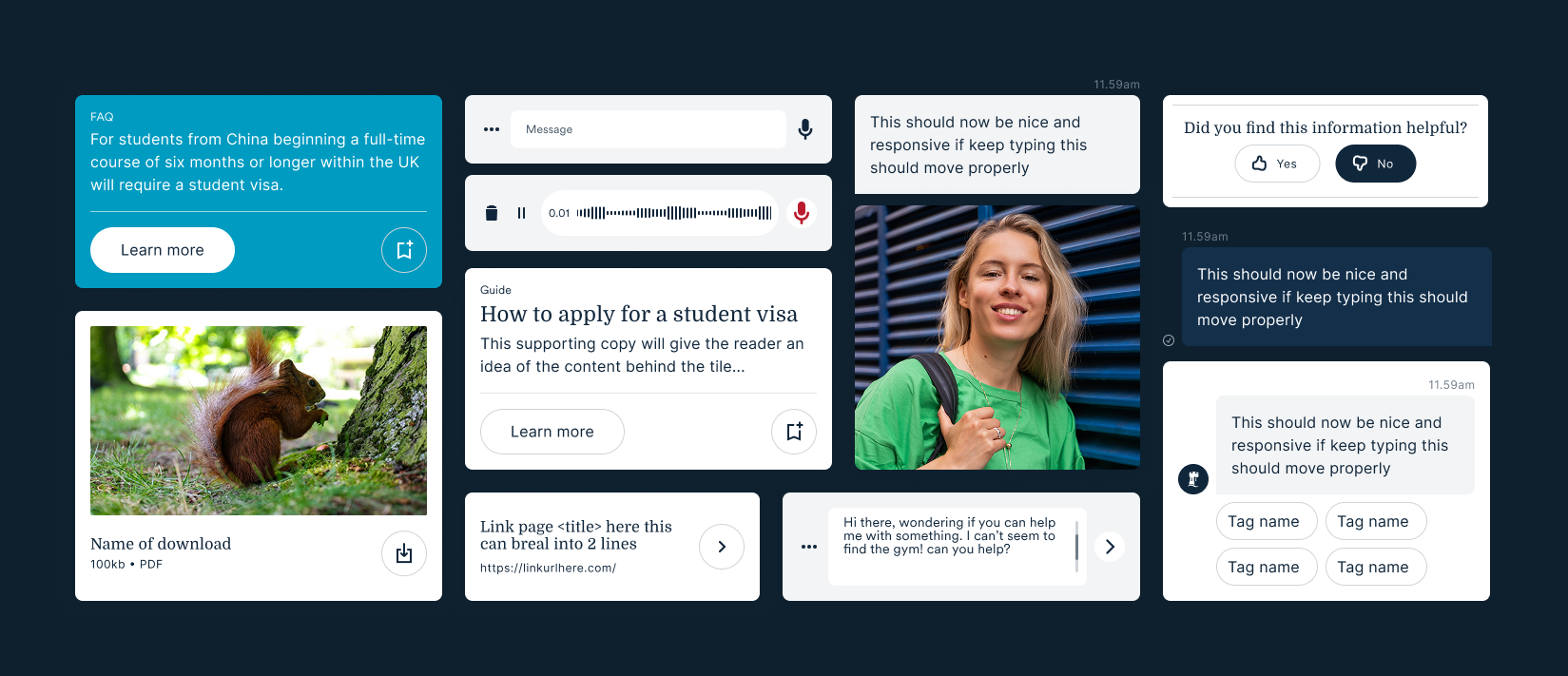
Role
Design lead, Conversational AI & self-serve
Focus
UX/UI, conversation design, service design
Outcome
Unified support flow across chatbot, live chat, FAQs
I led the design of the University of Nottingham's Help & Support chatbot. The project aimed to reduce enquiry volume, unify fragmented support channels, and create a data-driven foundation for future automation.
The problem
Bridging fragmented support experiences
Students often struggle to get timely, personalised help, while university teams face overwhelming enquiry volumes and limited visibility into what students actually need. The result: delayed responses, inconsistent service quality, and missed opportunities to engage prospective students earlier in their journey.
High level <s>features</s> goals
- Self-serve supportDeliver a support experience that answers questions instantly and accurately.
- Reduce repetitionCut repetitive enquiries and free staff to focus on high-value interactions.
- Real-time insightsSurface student pain points and enquiry trends as they emerge.
- Scalable foundationBuild a base for future automation across departments.
What we already know
Repetition costs time
Support teams spend a lot of their time responding to the same set of questions. Yet, these answers weren't easily accessible or personalised, forcing students to email or call repeatedly and delaying responses to more complex, high-value enquiries.
A large share of enquiry volume could be automated through well-structured, conversational logic.
Speed defines perception
Students have grown accustomed to instant, app-like support, similar to what they experience on retail or banking platforms. When university responses take days instead of minutes, it directly impacts trust and perceived accessibility.
Timeliness isn't just a UX metric; it shapes how students perceive the university.
Info gaps hurt conversion
A surprising 62% of enquirers never progressed to application. Many dropped off simply because they couldn't find or confirm essential details, course requirements, key dates, or funding options. A proper help and support hub should solve this.
Reducing friction in accessing information early could significantly boost conversion and engagement.
Data lives in silos
Support data existed in separate systems, emails, chat logs, and departmental inboxes, making it impossible to identify enquiry trends or measure performance holistically.
Without central visibility the university couldn't learn from its own data or anticipate emerging needs.
Disconnected tools
Existing support tools were rigid and disconnected, unable to adapt quickly to new programmes, policy updates, or seasonal enquiry spikes. Teams often relied on manual workarounds to keep pace.
We needed a flexible system that could evolve with user behaviour and changes.
Core questions unanswered
19% of all queries were about offers and 11% were about application status, the two most critical points in a student's journey. Yet, these answers weren't easily accessible or surfaced within existing support tooling.
Making high-demand information instantly retrievable can dramatically reduce enquiry volume.
How might we create a support experience that learns and adapts, reducing effort for students while increasing insight for the university?
How I tackled this problem
Based on existing research and enquiry analytics, we already had strong evidence of where the main friction points were, so instead of starting with more discovery research, I focused on solution exploration through design.

1. Formative research
Research the industry; what others are doing well and why it works.

2. Ideation and design
Turning all available insights into structured experiences.

3. Evaluative research
Testing the experience, journeys and usability with real students.
Phase 1 – Formative research
What others are doing well (and why it works)
To ground our direction in evidence, I reviewed best-in-class products and interaction models across self-service systems (airline, telco, banking), AI and rule-based chatbots (tone, escalation, fallback), higher-education portals (support discoverability, student language), and FAQ and knowledge-base interfaces (information hierarchy, surfacing logic).
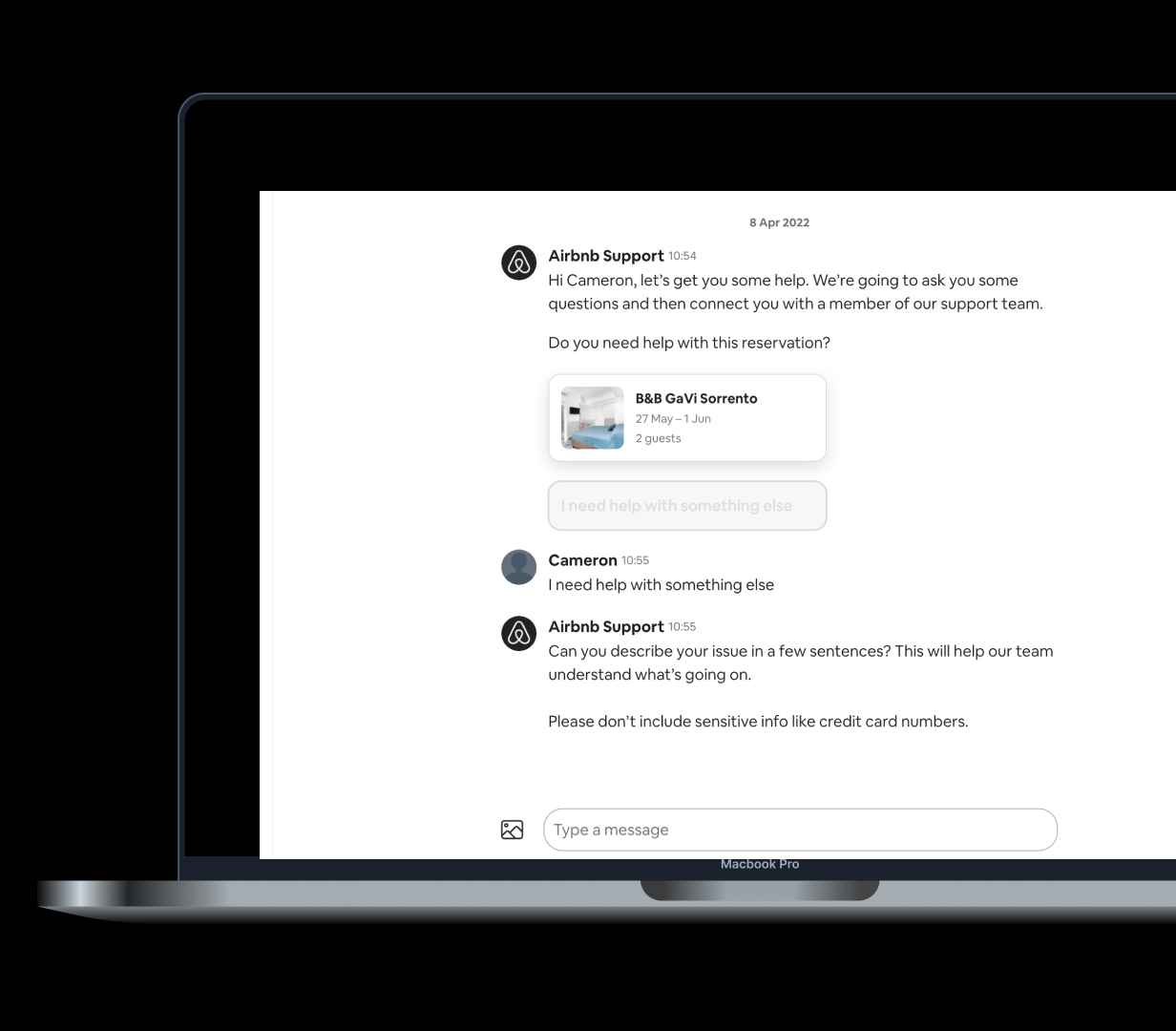
AirBnB – Chatbot
On-demand service making it easily available at any time for maximum usage. Allows Airbnb to maximise their business opportunities and customer satisfaction. This aspect we need to consider when serving students across time zones.
Proactive approach features within the chatbot, so users know it's there.
Personalised experience allows for previous chats to be logged with each interaction being driven by data from the user's account. User experience becomes less clunky and avoids user dissatisfaction.
Human approach, interactions feel more conversational and natural than other chatbots, something that helps build trust.
Phase 2 – Ideation & design
Turning insights into structured experiences
With a clear understanding of existing patterns and pain points, I moved into defining how our chatbot and wider help ecosystem should work together. The goal was to ensure every support touchpoint, chatbot, live chat, FAQs, articles and enquiry forms, felt connected and purposeful.
To achieve this, I:
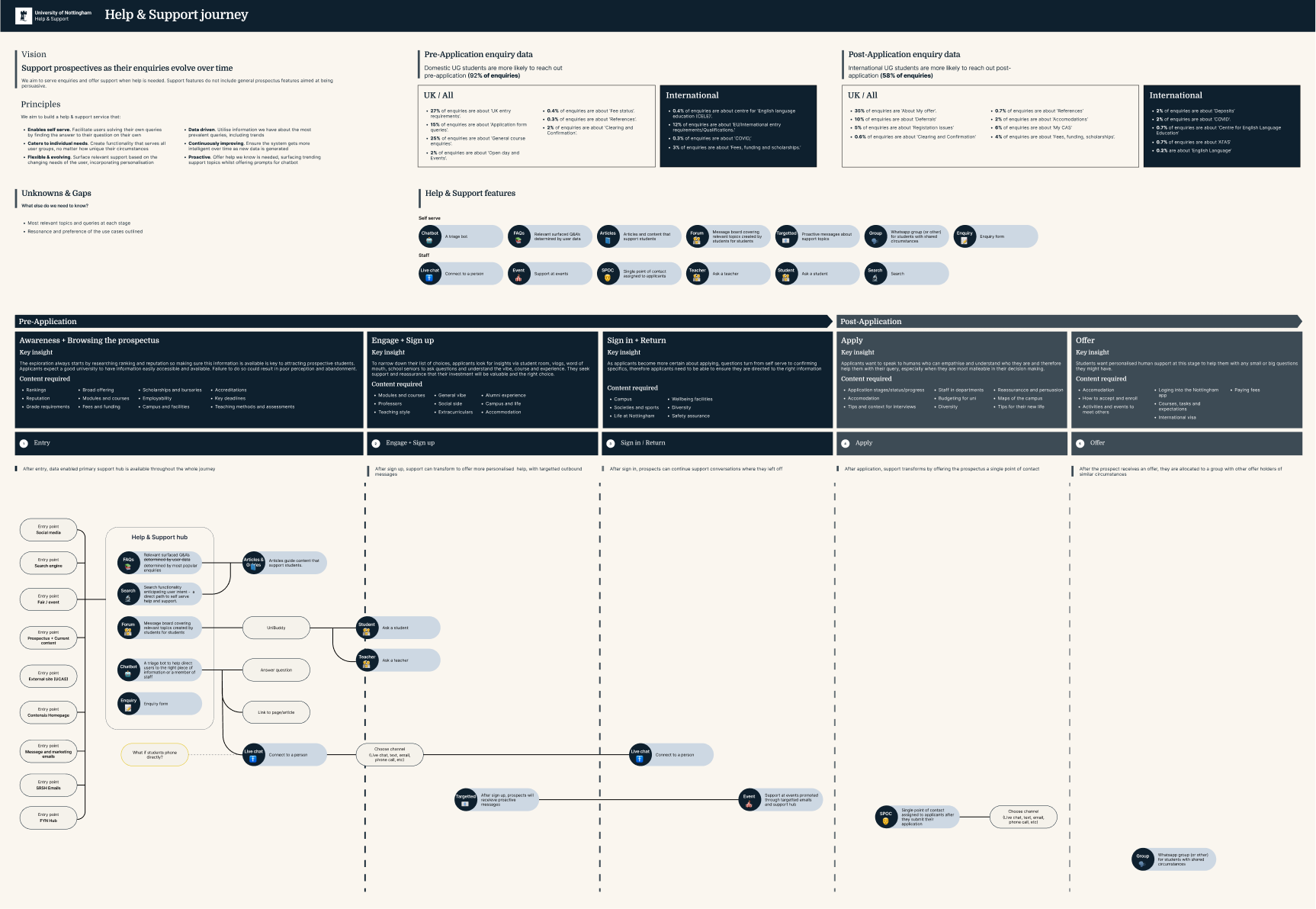
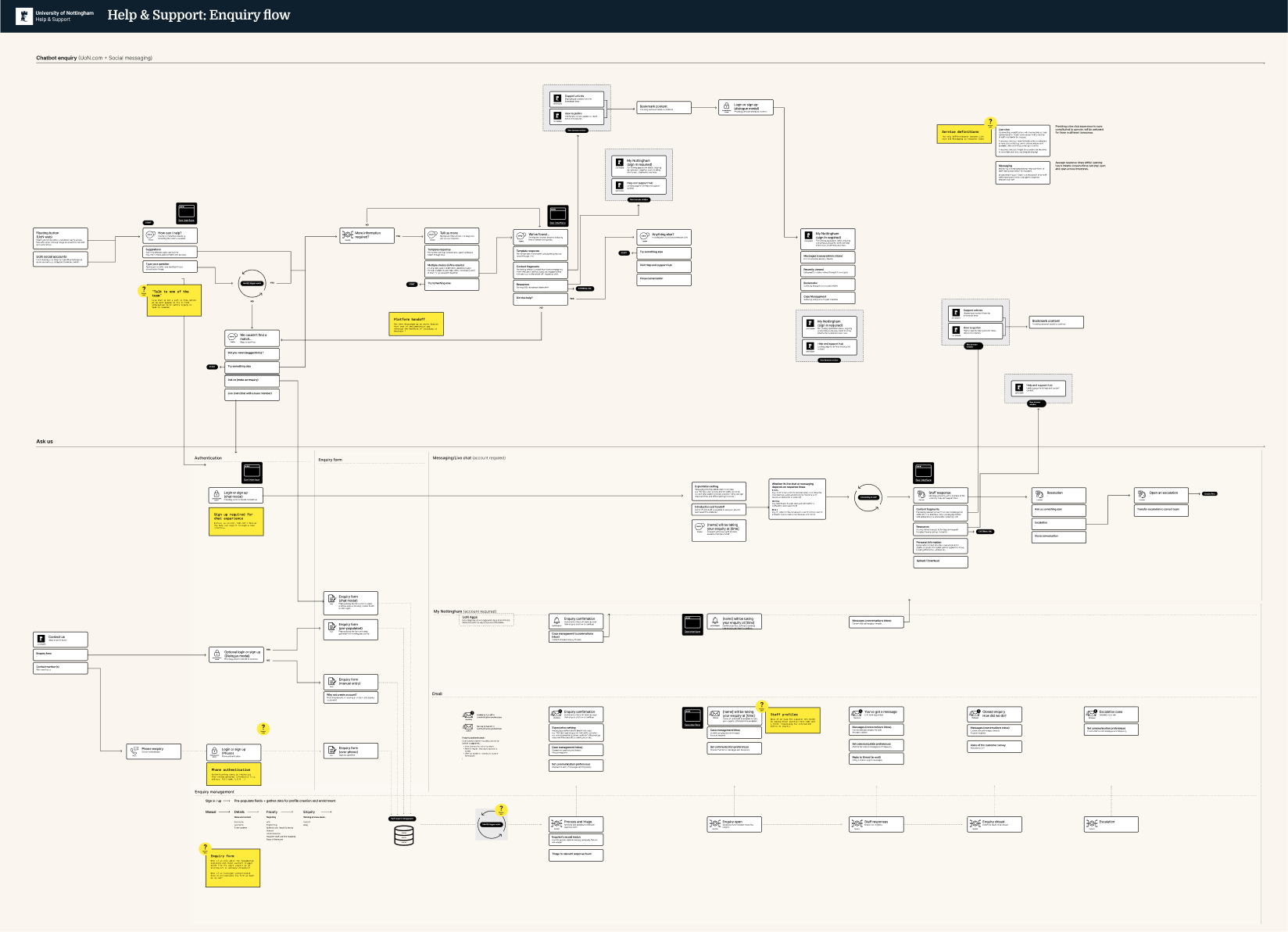
- Mapped the end-to-end enquiry journeyHighlighting user goals, emotions, and decision points across touchpoints.
- Designed a unified enquiry flowShowing how each support product (including the chatbot) contributes to resolving user needs.
- Defined system logic and conversation architectureAligning chatbot behaviour with the enquiry types and escalation rules.
- Created early UI conceptsVisualising how users would move between predefined responses, free-form chat, and related content.
Design solution & features
Predefined Responses
Predefined responses are system-generated fallback messages the chatbot uses whenever it needs more information, can't find a confident answer, or encounters an error. They help keep the conversation moving by guiding the user back into a clear path instead of leaving them at a dead end.
Free-form and Guided Chatting
Students can type naturally into the chat, but to improve the chatbot's learning and intent recognition, predefined cards are also available. These cards act as “conversation starters,” helping users drill down into specific questions faster. The hybrid model keeps interactions intuitive and ensures students get precise, context-aware answers.
Responding with Knowledge Base
The chatbot consumes verified content from the university's FAQ and article database, delivering consistent, trustworthy responses. When possible, it references relevant knowledge-base entries or surfaces article links directly within the chat, blending conversational flow with factual precision.
Escalation, Auth and Handover
When the bot can't confidently resolve a query, it hands the conversation to a real advisor with full context, authenticating the student first where needed. The handover is seamless, no repeated questions, no lost history, so the human advisor picks up exactly where the bot left off.
Live Chat
For complex or emotionally sensitive queries, students can jump straight into live chat with a human advisor. Availability windows, expected response times and role-based routing are surfaced up front so students always know what to expect.
Feedback Gathering
Every conversation ends with a lightweight feedback prompt, was this helpful?, feeding directly into the model training loop and content backlog. Over time this closes the gap between what students ask and what the system can confidently answer.
Phase 3 – Evaluative research
Testing the experience with real students
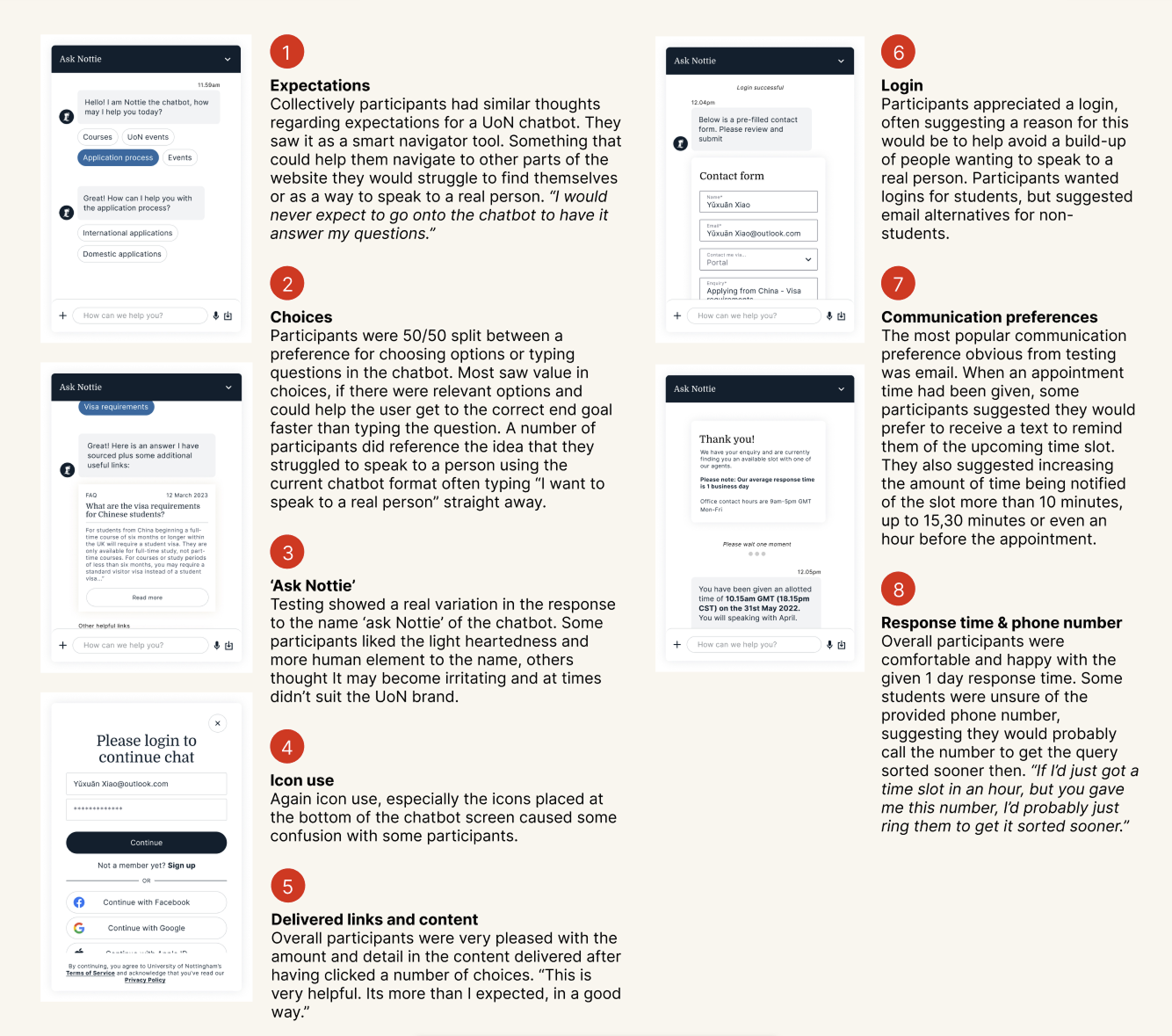
Once the core flows and UI were developed, we ran evaluative testing to understand how well the chatbot performed in real scenarios, how students interpreted the interface, and where the experience needed refinement.
We tested with eight first-year undergraduate students, a mix of domestic and international learners aged 18–21. This group reflected the audience most likely to rely on the chatbot for admissions, visa, and early academic enquiries.
Impact
Design impact, learnings and future thinking
The chatbot delivered measurable improvements across both operational efficiency and student experience.
Business & user impact
- Significant reduction in enquiry volumeThe system successfully handled ~11,400 queries, with only 5% requiring escalation to a human agent, demonstrating strong accuracy and effective conversation design.
- Shift toward self-serve behaviourOut of 115,379 total visits, only 34% (39,289) proceeded to enquiry forms or support tickets, a strong indicator that the chatbot and help content resolved issues earlier in the journey.
- Improved routing and clarity for studentsThe new enquiry flow reduced confusion around what to do next, helping students self-identify needs faster and reducing misrouted queries.
- Consistency across the support ecosystemKnowledge-base integration ensured that answers received via chatbot, articles, and forms were aligned, solving the fragmented messaging highlighted in research.
- Better experience for international studentsPersonalised guidance and clearer escalation paths reduced the uncertainty previously felt when navigating complex topics like visas and admissions.
Future thinking and learnings
The project revealed several areas for further evolution, enhancements that could deepen trust, increase clarity, and make the experience feel more human.
More 'human' escalations
When queries are handed to a live agent, the experience could be more personable, showing the agent's face, name, role, and local time to create a stronger human connection.
'Save my place' queueing
During peak periods, giving students the option to secure a slot or get notified when an agent is ready would make high-volume moments more manageable.
Multi-turn memory and continuity
Future versions could recall previous enquiries or understand conversation context over multiple sessions, creating a more fluid, intelligent experience.
Proactive support based on trends
With richer analytics, the system could surface automated nudges like: 'It looks like a lot of students are asking about CAS today, here's the updated timeline.'
Deeper personalisation for returning students
Integrating student profiles (course, level, deadlines) could help tailor responses, especially during early academic weeks and assessment periods.